


Your cart is empty.
Click here to purchase!
Blog
GABA – Effects, Side Effects, and Use as a Dietary Supplement

28/08/2025
13:08
GABA is not a secret code (although its name might suggest so), but one of your body’s most important calming agents. In recent years, more and more dietary supplements include it, mainly in stress-relief and sleep-support formulas. But what exactly is GABA, where does it come from, and what can you expect from taking it? In today’s article, we will explore these questions.

What is GABA?
Despite its scientific name, gamma-aminobutyric acid (GABA) is a naturally occurring substance in the body. It functions as a neurotransmitter, often referred to as the body’s “calming chemical messenger.”
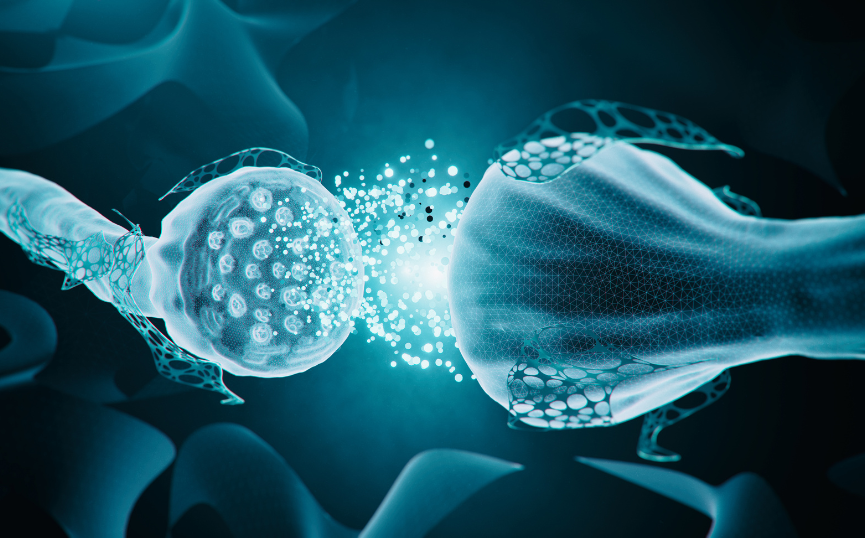
To understand its role, let’s start with the basics: neurotransmitters are chemical molecules that facilitate communication between nerve cells (neurons). They bind to specific receptors, triggering a cellular response. GABA is the body’s primary inhibitory neurotransmitter, meaning it “quiets” overactive neurons, helping to maintain a healthy balance in the nervous system. Adequate GABA levels promote calmer brain activity, reduce anxiety, and improve sleep quality.1
There are two main types of GABA receptors:
- GABA-A receptors: These provide fast, direct inhibition. Dysfunction is linked to epilepsy and anxiety disorders.2
- GABA-B receptors: These produce slower, longer-lasting inhibition. Issues with these receptors are associated with chronic pain.3,4
GABA is concentrated in the following brain regions:
- Cerebral cortex: Prevents sensory overload.
- Hippocampus: Plays a role in learning and regulating anxiety.
- Cerebellum: Supports motor coordination and balance.
- Brainstem and basal ganglia: Regulates movement and autonomic functions.
What happens when GABA levels are low?
Low GABA levels lead to overactive neurons. Imagine being bombarded with excessive environmental stimuli: it becomes hard to focus, tension builds, and even muscles can feel strained. This is what happens during a GABA deficiency.
Symptoms of low GABA may include:
- Increased anxiety and restlessness
- Sleep disturbances, such as difficulty falling or staying asleep
- Feelings of tension or irritability
- Difficulty concentrating
- Muscle tension or cramps
- Increased susceptibility to panic attacks
- Heightened sensitivity to stress over time
What causes GABA deficiency?
It’s a great question because GABA deficiency—or rather, reduced GABA signaling—doesn’t simply mean the body “runs out” of GABA. Instead, it arises from various biological mechanisms.
Lifestyle factors influence GABA levels through their impact on cortisol, the stress hormone, which can shift the nervous system toward overexcitation.
Reversible factors affecting GABA pathways include:5
- Chronic stress: High cortisol levels impair GABA function.
- Sleep deprivation: Reduces GABA release in sleep-regulating brain areas.
- Chronic alcohol or medication use: Desensitizes receptors, requiring more GABA to achieve the same effect.
- Lack of exercise or poor diet: Increases oxidative stress, damaging the GABAergic system.
The good news? These factors can often be addressed through lifestyle changes. However, genetic issues, which significantly increase the risk of mental health disorders, require professional medical intervention.
Non-lifestyle-related or rare causes include:
- Enzyme defects or autoimmune inhibition (e.g., anti-GAD antibodies).
- Vitamin B6 metabolism disorders.
- Receptor mutations (linked to epileptic syndromes).
- Increased GABA breakdown due to GABA-transaminase enzyme activity (a rare genetic variation).
Conditions associated with GABA pathway dysfunction:
- Epilepsy
- Anxiety and depression
- Schizophrenia
- Insomnia (chronic sleep deprivation)
Where does GABA in supplements come from?
GABA occurs naturally and is produced in dietary supplements through fermentation processes. The most common method involves lactic acid bacteria fermentation, where specific strains of lactobacillus convert glutamic acid from plant proteins into GABA.
Why is GABA available as a supplement if it’s a neurotransmitter? Doesn’t it require a prescription?
GABA supplementation is not considered hormone replacement, and the amounts used do not disrupt hormonal balance. Unlike hormones like testosterone, which directly affect the endocrine system and are prescription-only, GABA is an amino acid derivative and neurotransmitter. Additionally, when taken orally, GABA crosses the blood-brain barrier only minimally, limiting its central nervous system effects and reducing the risk of overdose.
What can you expect from taking GABA supplements?
GABA supplements don’t exert direct effects on the central nervous system but influence the body through other pathways. Let’s explore the specific benefits backed by clinical research:
- Stress reduction and calmness: A review of 14 clinical studies found that GABA supplementation positively impacts mental stress and mood.8
- Improved sleep quality: Multiple studies confirm that disruptions in GABA pathways contribute to insomnia, a severe sleep disorder.9
- Antioxidant effects after sleep deprivation: Beyond promoting relaxation and aiding sleep, GABA offers indirect antioxidant benefits. Sleep deprivation increases oxidative damage to neurons, and GABA’s influence on hormonal systems helps mitigate this damage, providing neuroprotective effects.10
- Enhanced exercise recovery: Clinical studies suggest GABA supplementation can increase growth hormone levels11, lean muscle mass12, and slightly improve physical performance13. These effects stem from GABA’s role in promoting rest and recovery between workouts, not directly enhancing exercise performance.
So, GABA is proven to promote relaxation. But how does it work if it doesn’t directly reach the brain? And how strong is its effect on the nervous system?
Why do GABA supplements work?
GABA receptors are not only found in the brain but also in peripheral nerves, smooth muscles of internal organs, and the respiratory system. For example:
- In the respiratory system, GABA promotes relaxation of airway muscles, potentially leading to calmer breathing patterns and bronchodilation in experimental settings.14,15
- In the digestive system, GABA activates GABA-B receptors in the gut, potentially reducing excessive gut motility and irritation, though strong human evidence is limited.16
- In the cardiovascular system, GABA may slightly lower blood pressure and stabilize fluctuations.17
- The gut microbiome (e.g., Lactobacillus and Bifidobacterium strains) also produces GABA, which indirectly influences brain function by activating the vagus nerve and modulating immune cells and hormones like cortisol and cytokines.18
How effective are GABA supplements?
Let’s rate the effectiveness of GABA supplements on a scale of 1 to 10, where:
- 1: Mild, barely noticeable calming effects (e.g., chamomile tea).
- 10: Powerful, consciousness-suppressing sedatives (e.g., barbiturates or high-dose propofol).
As a dietary supplement, GABA scores around 3–4 in terms of calming effects.
Dosing guidelines for GABA supplements:
- 20–300 mg (0.02–0.3 g): Used to improve sleep quality, mood, and stress markers.19,20
- 800 mg (0.8 g): Applied to enhance attention.21
- 100–300 mg (0.1–0.3 g): Used in studies over 1–4 weeks to improve sleep quality.19
- 3,000–5,000 mg (3–5 g): Used to boost growth hormone levels.22-24
However, due to limited clinical research, it’s unclear whether these doses are optimal.

Side effects of GABA
GABA supplements are generally considered safe, but higher doses may cause:
- Drowsiness or fatigue
- Dizziness
- Slowed breathing (rare, at high doses)
- Sudden drops in blood pressure
Consult a doctor before use if pregnant, breastfeeding, or managing neurological conditions.
How to naturally enhance GABA supplement effects
GABA is often combined with other calming or sleep-supporting ingredients, such as:
- L-theanine
- Melatonin
- Magnesium
- B vitamins
These combinations are commonly found in sleep aids or stress-relief complexes.
Vitamin360’s recommendations:
- Nature’s Way GABA (60 Capsules): Contains 250 mg of GABA per serving, a moderate dose to minimize potential side effects.
- GAL B-Complex (60 Veg Capsules): A high-potency B-vitamin complex in bioavailable forms.
- GAL Magnesium Bisglycinate: Magnesium helps reduce excessive nervous system activity, complementing GABA’s effects.
Use this combination for 4–6 weeks, then take at least a 2-week break, primarily due to the high-potency B-complex.
Sources ⋙
- Jewett BE, Sharma S. Physiology, GABA. 2023 Jul 24. In: StatPearls [Internet]. Treasure Island (FL): StatPearls Publishing; 2025 Jan–. PMID: 30020683.
- Ghit A, Assal D, Al-Shami AS, et al. GABAA receptors: structure, function, pharmacology, and related disorders. J Genet Eng Biotechnol. 2021;19:123. doi: 10.1186/s43141-021-00224-0.
- Pinard A, Seddik R, Bettler B. GABAB receptors: physiological functions and mechanisms of diversity. Adv Pharmacol. 2010;58:231-55. doi: 10.1016/S1054-3589(10)58010-4. PMID: 20655485.
- Benke D. GABAB Receptors and Pain. Curr Top Behav Neurosci. 2022;52:213-239. doi: 10.1007/7854_2020_130. PMID: 32812203.
- Novak TS, McGregor KM, Krishnamurthy LC, Evancho A, Mammino K, Walters CE Jr, Weber A, Nocera JR. GABA, Aging and Exercise: Functional and Intervention Considerations. Neurosci Insights. 2024 Sep 26;19:26331055241285880. doi: 10.1177/26331055241285880. PMID: 39377050; PMCID: PMC11457286.
- Dombrowski MD, Mueller PJ. Sedentary conditions and enhanced responses to GABA in the RVLM: role of the contralateral RVLM. Am J Physiol Regul Integr Comp Physiol. 2017 Aug 1;313(2):R158-R168. doi: 10.1152/ajpregu.00366.2016. Epub 2017 May 10. PMID: 28490450; PMCID: PMC5582955.
- Karst H, Droogers WJ, van der Weerd N, Damsteegt R, van Kronenburg N, Sarabdjitsingh RA, Joëls M. Acceleration of GABA-switch after early life stress changes mouse prefrontal glutamatergic transmission. Neuropharmacology. 2023 Aug 15;234:109543. doi: 10.1016/j.neuropharm.2023.109543. Epub 2023 Apr 14. PMID: 37061088.
- Hepsomali P, Groeger JA, Nishihira J, Scholey A. Effects of Oral Gamma-Aminobutyric Acid (GABA) Administration on Stress and Sleep in Humans: A Systematic Review. Front Neurosci. 2020 Sep 17;14:923. doi: 10.3389/fnins.2020.00923. PMID: 33041752; PMCID: PMC7527439.
- Varinthra P, Anwar SNMN, Shih SC, Liu IY. The role of the GABAergic system on insomnia. Tzu Chi Med J. 2024 Mar 26;36(2):103-109. doi: 10.4103/tcmj.tcmj_243_23. PMID: 38645778; PMCID: PMC11025592.
- https://www.sciencedirect.com/science/article/pii/S2405844024166960
- Powers ME, Yarrow JF, McCoy SC, Borst SE. Growth hormone isoform responses to GABA ingestion at rest and after exercise. Med Sci Sports Exerc. 2008 Jan;40(1):104-10. doi: 10.1249/mss.0b013e318158b518. PMID: 18091016.
- Sakashita M, Nakamura U, Horie N, Yokoyama Y, Kim M, Fujita S. Oral Supplementation Using Gamma-Aminobutyric Acid and Whey Protein Improves Whole Body Fat-Free Mass in Men After Resistance Training. J Clin Med Res. 2019 Jun;11(6):428-434. doi: 10.14740/jocmr3817. Epub 2019 May 10. PMID: 31143310; PMCID: PMC6522239.
- de Medeiros Pires LV, de Barros Martins A, Trindade CMO, Dos Santos Baleeiro R, Peixoto TG, Teixeira E Silva VL, de Castro Pinto KM, Guimarães Drummond E Silva F, Coelho DB, de Oliveira EC, Becker LK. Effects of combined gamma aminobutyric acid supplementation and exercise training on the body composition of women: A randomized double-blind trial. Clin Nutr ESPEN. 2025 Aug;68:81-87. doi: 10.1016/j.clnesp.2025.04.028. Epub 2025 May 7. PMID: 40345658.
- Gallos G, Gleason NR, Zhang Y, Pak SW, Sonett JR, Yang J, Emala CW. Activation of endogenous GABAA channels on airway smooth muscle potentiates isoproterenol-mediated relaxation. Am J Physiol Lung Cell Mol Physiol. 2008 Dec;295(6):L1040-7. doi: 10.1152/ajplung.90330.2008. Epub 2008 Sep 12. PMID: 18790991;'яз PMCID: PMC2604789.
- Mizuta K, Xu D, Pan Y, Comas G, Sonett JR, Zhang Y, Panettieri RA Jr, Yang J, Emala CW Sr. GABAA receptors are expressed and facilitate relaxation in airway smooth muscle. Am J Physiol Lung Cell Mol Physiol. 2008 Jun;294(6):L1206-16. doi: 10.1152/ajplung.00287.2007. Epub 2008 Apr 11. PMID: 18408071; PMCID: PMC3647697.
- Hung JS, Yi CH, Liu TT, Lei WY, Wong MW, Chen CL. Effects of GABA-B agonist baclofen on esophageal motility: Studies using high-resolution manometry. Neurogastroenterol Motil. 2019 Dec;31(12):e13716. doi: 10.1111/nmo.13716. Epub 2019 Sep 29. PMID: 31565828.
- Ma P, Li T, Ji F, Wang H, Pang J. Effect of GABA on blood pressure and blood dynamics of anesthetic rats. Int J Clin Exp Med. 2015 Aug 15;8(8):14296-302. PMID: 26550413; PMCID: PMC4613098.
- Strandwitz P, Kim KH, Terekhova D, Liu JK, Sharma A, Levering J, McDonald D, Dietrich D, Ramadhar TR, Lekbua A, Mroue N, Liston C, Stewart EJ, Dubin MJ, Zengler K, Knight R, Gilbert JA, Clardy J, Lewis K. GABA-modulating bacteria of the human gut microbiota. Nat Microbiol. 2019 Mar;4(3):396-403. doi: 10.1038/s41564-018-0307-3. Epub 2018 Dec 10. PMID: 30531975; PMCID: PMC6384127.
- Hepsomali P, Groeger JA, Nishihira J, Scholey A. Effects of Oral Gamma-Aminobutyric Acid (GABA) Administration on Stress and Sleep in Humans: A Systematic Review. Front Neurosci. 2020 Sep 17;14:923. doi: 10.3389/fnins.2020.00923. PMID: 33041752; PMCID: PMC7527439.
- Yoto A, Murao S, Motoki M, Yokoyama Y, Horie N, Takeshima K, Masuda K, Kim M, Yokogoshi H. Oral intake of γ-aminobutyric acid affects mood and activities of central nervous system during stressed condition induced by mental tasks. Amino Acids. 2012 Sep;43(3):1331-7. doi: 10.1007/s00726-011-1198-4. PMID: 22139497.
- Leonte A, Colzato LS, Steenbergen L, Hommel B, Akyürek EG. Supplementation of gamma-aminobutyric acid (GABA) affects temporal, but not spatial visual attention. Brain Cogn. 2018 Feb;120:8-16. doi: 10.1016/j.bandc.2017.11.001. PMID: 29197797.
- Cavagnini F, Benetti G, Invitti C, Ramella G, Pinto M, Lazza M, Dubini A, Marelli A, Müller EE. Effect of gamma-aminobutyric acid on growth hormone and prolactin secretion in man: influence of pimozide and domperidone. J Clin Endocrinol Metab. 1980 Oct;51(4):789-92. doi: 10.1210/jcem-51-4-789. PMID: 7419662.
- Cavagnini F, Invitti C, Pinto M, Maraschini C, Di Landro A, Dubini A, Marelli A. Effect of acute and repeated administration of gamma aminobutyric acid (GABA) on growth hormone and prolactin secretion in man. Acta Endocrinol (Copenh). 1980 Feb;93(2):149-54. doi: 10.1530/acta.0.0930149. PMID: 7376796.
- Powers ME, Yarrow JF, McCoy SC, Borst SE. Growth hormone isoform responses to GABA ingestion at rest and after exercise. Med Sci Sports Exerc. 2008 Jan;40(1):104-10. doi: 10.1249/mss.0b013e318158b518. PMID: 18091016.

Among our articles written by our nutrition expert, you'll find product reviews and helpful tips on healthy living and prevention.
Our most popular articles:
