


Your cart is empty.
Click here to purchase!
Blog
"I eat so little, yet I can't lose weight" — What's really holding back your weight loss?

11/03/2026
10:21
When it comes to fat loss, countless myths continue to circulate. A major reason for this is the overwhelming flood of information spreading through social media and everyday conversations — much of it contradictory. For the average person, separating fact from fiction has become nearly impossible.
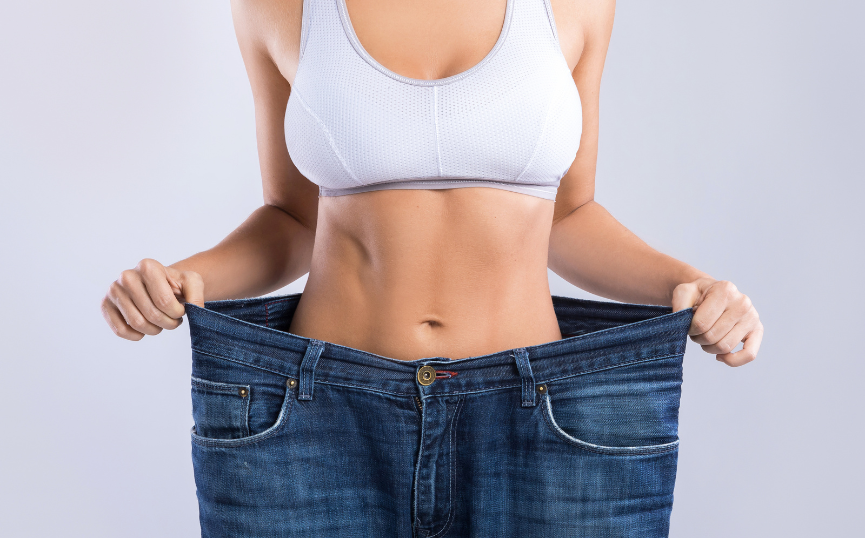
The most common complaints surrounding weight loss are the following:
- “I barely eat, yet I still can’t lose weight.”
- “Since I started dieting, I’ve actually gained two kilos.”
- “I hardly eat anything, I live on coffee, yet my belly keeps growing.”
If this sounds familiar, it is important to know: you are not alone, and the explanation is rarely some serious hormonal disorder. In most cases, the answer is surprisingly simple: you don’t know exactly how much you are eating. The solution is not another miracle diet, but tracking your calorie intake — and yes, today this is far easier than it used to be.
Why can we confidently say that the information presented here is reliable?
The information we provide about how the body works is not based on guesswork, but on solid biophysical principles and references to clinical studies.
This means that there are certain biological laws that cannot be contradicted — no matter how much we might wish they worked differently, or how convenient it would be if they did.
The only scientifically proven way to lose weight: a calorie deficit
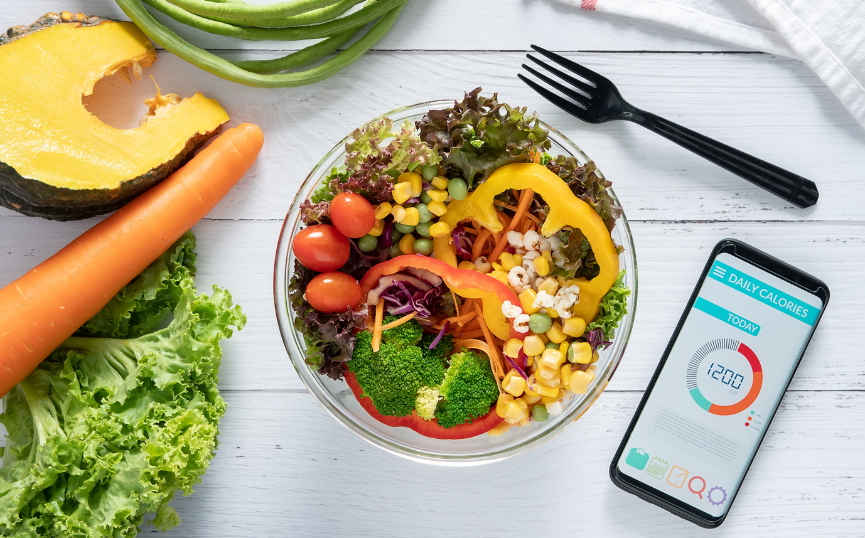
One of the most firmly established principles in modern nutritional science, supported by decades of research, is the following:
“If you consume less energy than your body uses, you will lose weight. If you consume more, you will gain weight.”
This is not an opinion, a trend, or diet marketing — it is a biological law rooted in the basic principles of physics. The body’s energy balance obeys the first law of thermodynamics, which states:
“Energy cannot be created or destroyed, only transformed.”
This is the simplified textbook explanation. The formal scientific definition states:
“The total energy of a closed system remains constant; energy can change from one form to another, but it cannot be created or destroyed.”1
What does science say about weight loss? — Lessons from two major studies
We understand the law of physics, but that alone would mean little without practical, clinical evidence.
In a study published in the New England Journal of Medicine examining more than 800 participants2, researchers compared various diets, including high-protein, low-fat and high-carbohydrate approaches. Participants were followed for more than a year.
The most important conclusions of the study were:
- the amount of weight loss was independent of the type of diet followed,
- the macronutrient composition (fat–carbohydrate–protein ratio) did not significantly influence weight loss,
- and the only determining factor in weight reduction was total calorie intake.
The authors summarized their conclusion in a single sentence:
“Different diets resulted in similar weight loss as long as they produced a calorie deficit.”
This research clearly demonstrates that the type of diet matters far less than the overall energy balance.
Another study followed more than 300 participants3 over a two-year period. Researchers compared low-carbohydrate and low-fat diets.
The most important findings were:
- both groups achieved very similar levels of weight loss,
- metabolic markers (blood sugar, blood lipids, etc.) improved in both groups,
- macronutrient composition was not a determining factor,
- and once again, the key to weight loss was a calorie deficit — not carbohydrate or fat intake.
The study therefore confirms that macronutrient ratios are secondary, while the calorie deficit remains the primary driver.
In roughly 90% of cases, the absence of weight loss is not hormonal but simply a matter of energy balance.
This does not mean that hormonal symptoms should be ignored. Hormonal imbalances can have serious health consequences and should always be medically evaluated when symptoms appear.
However, when it comes to body weight, the influence of hormonal deviations is typically much smaller than many people believe. Their effect on calorie balance is real, but rarely large enough on its own to prevent weight loss.
Let’s look at the numbers: if something is off in your blood markers, how much can it actually slow metabolism?
Most hormonal conditions — such as mild hypothyroidism, insulin resistance, or PCOS — do not shut down metabolism and do not make weight loss “impossible”.
Examples include:
- Mild hypothyroidism: metabolism slows by about 5–10% on average. For someone with a maintenance need of 2000 kcal, this represents only a 100–200 kcal difference per day.5
- Moderate hypothyroidism: the slowdown may be greater but rarely exceeds 15–20%. This corresponds to a 300–400 kcal difference — still manageable and not enough to prevent weight loss.6
- Insulin resistance and PCOS: research suggests that weight loss may be more difficult, but not because calorie burning decreases. Instead, stronger hunger signals and more frequent cravings make maintaining a calorie deficit harder, while blood sugar fluctuations may also lead to overeating.7,8
- Elevated cortisol (stress hormone): weight gain here is primarily behavioral, not metabolic.9 Appetite increases, calorie intake rises, and poorer sleep often leads to lower activity levels.
What about age? Does getting older really slow metabolism?
Aging does indeed slow metabolism — but not in the way many people imagine. Research shows that metabolism declines per decade, not overnight. The average slowdown is only about 0.5–1% per year. This is very small and often barely noticeable. Age itself does not cause sudden metabolic slowdown.10
When sudden changes occur, other factors are usually responsible:
- Loss of muscle mass (sarcopenia)11,12: this is the most significant factor because muscle tissue is metabolically active. When physical activity drops sharply, muscle can be lost within weeks, noticeably reducing daily calorie expenditure.
- Reduced physical activity13: this directly lowers the number of calories burned. Depending on the type of sport, the difference may reach 500–2500 kcal. More subtle changes also matter: walking less, moving less spontaneously, or doing less household work can reduce expenditure by 200–800 kcal.
- Sleep deprivation14: lack of sleep negatively affects metabolism by reducing spontaneous activity, increasing hunger, and affecting resting energy expenditure. With age, sleep regulation often changes, meaning “we simply sleep less.”18
- Stress and cortisol15: cortisol does not slow metabolism directly, but it increases appetite, reduces activity levels, and disrupts sleep. Research also suggests that cortisol levels tend to rise gradually with age, although the change is slow and varies between individuals.16,17
So why do so many people feel that they “barely eat”?
Because the human brain is extremely poor at estimating calorie intake.
Research shows that people underestimate their daily energy intake by an average of 30–50%.4
This means that if you believe you are eating 1200 kcal, the real intake may actually be 1800–2000 kcal — easily enough to prevent weight loss.
Calorie density: the hidden weapon of weight loss
Calorie density shows how much energy a food contains relative to its weight or volume.
This is why:
- 500 kcal of chocolate fits in the palm of your hand,
- the same energy in bananas equals about 5–6 bananas,
- the same energy in cucumbers would be roughly 5 kilograms,
- the same energy in chicken breast equals 600–700 grams,
- while the same energy in peanut butter is just two large spoonfuls.
The energy may be identical, yet the quantity — and the eating experience — is completely different.
Examples:
- Chocolate often leaves you hungry. Bananas likely won’t.
- No one can realistically eat as many calories from cucumbers as from chocolate. 90 g vs. 5 kilograms!
- Half a kilogram of chicken breast may keep you full all day, while two spoonfuls of peanut butter might work before a workout — but hunger returns quickly.
- Fast food is calorie-dense, low in volume, and rarely satisfying.
- Oils and fats are the most calorie-dense foods. 100 grams of olive oil or lard contain nearly 900 kcal.
Now you see it. Now you understand. This is why people gain weight from “small amounts of food.”
Why does calorie counting actually work?
Because it confronts you with reality.
Many people have an eye-opening moment when they first log their meals:
- “I thought this snack was 100 kcal… but it’s 450.”
- “My morning latte is 300 kcal?!”
- “A fast-food combo meal is 1500–1800 kcal?!”
- “My salad has more calories than a burger?” (Yes — if you drown it in oil.)
Calorie counting works not because it is magic, but because it finally gives you an accurate numerical picture of how much you are actually eating.
How should you start?

- You don’t need to change your diet
You can keep eating the same foods — just eat less. Not necessarily fewer grams, but fewer calories.
- Start tracking calories
You can use an app, but even ChatGPT can help. Tracking calories has never been easier — you can simply take a photo of your meal and AI can estimate it.
- Find your maintenance calories
Online calculators estimate this number based on your age, sex, body weight, height, and activity level. This is the amount that keeps your weight stable over the long term.
- Eat 10–20% less
This creates a sustainable deficit. As a rule of thumb, losing about 0.5 kg per week requires roughly a 500 kcal deficit, while losing 1 kg per week requires around 1000 kcal.
- Avoid extremes
There is no need to drop to 1200 kcal. Extremely low intake often backfires. It is generally not advisable to exceed a 1000 kcal daily deficit.
How to stay full in a calorie deficit
The key is high-volume, low-calorie-density foods.
Examples include:
- vegetables (cucumber, peppers, zucchini, tomatoes)
- fruits (apples, berries, oranges)
- lean meats
- egg whites
- rice, potatoes
- oats
- soups
- zero-calorie drinks
- light dairy products
Avoid or measure carefully:
- oil (1 tablespoon = 120 kcal)
- peanut butter
- cheese
- bakery products
- chocolate and sweets
- fast food
- alcohol
Why is there no other path besides a calorie deficit?
Research available on PubMed consistently shows:
- The keto diet works because you eat fewer calories.
- A vegan diet works because you eat fewer calories.
- Fasting works because you eat fewer calories.
- “Not eating after 6 pm” works because you eat fewer calories.
The method may vary — but the mechanism is always the same. The calorie deficit is unavoidable.
Sources ⋙
- Mérő László – Fizika 11. (Mozaik Kiadó)
- Sacks et al., 2009 – Comparison of Weight-Loss Diets with Different Compositions of Fat, Protein, and Carbohydrates
- Foster et al., 2010 – Weight and Metabolic Outcomes After 2 Years on a Low-Carbohydrate Versus Low-Fat Diet
- https://www.nejm.org/doi/pdf/10.1056/NEJM199212313272701?articleTools=true
- https://www.health.harvard.edu/newsletter_article/the-lowdown-on-thyroid-slowdown
- https://www.niddk.nih.gov/health-information/endocrine-diseases/hypothyroidism
- Yujie Shang, Huifang Zhou, Minghui Hu, Hua Feng, Effect of Diet on Insulin Resistance in Polycystic Ovary Syndrome, The Journal of Clinical Endocrinology & Metabolism, Volume 105, Issue 10, October 2020, Pages 3346–3360, https://doi.org/10.1210/clinem/dgaa425
- Diakosavvas, M., Oyebode, O. & Bhide, P. Weight Management Strategies to Reduce Metabolic Morbidity in Women With Polycystic Ovary Syndrome. Curr Obes Rep 14, 22 (2025). https://doi.org/10.1007/s13679-025-00614-2
- https://www.nature.com/articles/s41398-020-0729-6.pdf
- https://www.sciencedaily.com/releases/2021/08/210812145028.htm
- Marques, J., Shokry, E., Uhl, O. et al. Sarcopenia: investigation of metabolic changes and its associated mechanisms. Skeletal Muscle 13, 2 (2023). https://doi.org/10.1186/s13395-022-00312-w
- https://www.frontiersin.org/journals/nutrition/articles/10.3389/fnut.2023.1037200/full
- https://www.pnas.org/doi/10.1073/pnas.2519626122
- https://www.mdpi.com/2673-4168/5/2/48
- https://www.health.harvard.edu/staying-healthy/understanding-the-stress-response
- Scott D Moffat, Yang An, Susan M Resnick, Michael P Diamond, Luigi Ferrucci, Longitudinal Change in Cortisol Levels Across the Adult Life Span, The Journals of Gerontology: Series A, Volume 75, Issue 2, February 2020, Pages 394–400, https://doi.org/10.1093/gerona/gly279
- Martocchia, A., Gallucci, M., Noale, M. et al. The increased cortisol levels with preserved rhythmicity in aging and its relationship with dementia and metabolic syndrome. Aging Clin Exp Res 34, 2733–2740 (2022). https://doi.org/10.1007/s40520-022-02262-1
- https://www.frontiersin.org/journals/public-health/articles/10.3389/fpubh.2025.1539849/full

Among our articles written by our nutrition expert, you'll find product reviews and helpful tips on healthy living and prevention.
Our most popular articles:
