


Your cart is empty.
Click here to purchase!
Blog
Vitamins and Supplements for Hair Loss – a Cause-Based Approach

08/09/2025
11:31
Hair loss (alopecia) is one of the most common issues, affecting millions of women and men worldwide. Even the first signs can be alarming. In most cases the problem can be addressed targetedly and “quickly”—you just need proper root-cause assessment and a matching routine.
It’s important to know that hair loss is not a disease in itself but a symptom: hormonal changes, nutrient deficiencies, stress, autoimmune processes, medications, or even environmental factors may be behind it. That’s why generic “hair vitamins” usually won’t solve it. The problem needs a more targeted approach. After identifying the cause, your lifestyle and supplementation should be adjusted accordingly.
 1. Hair Loss Due to Nutrient Deficiency
It may come as a surprise, but vitamin deficiencies remain common even today. Let’s dive into some eye-opening statistics!
- In the U.S., 6% of adults suffer from severe vitamin C deficiency. Larger studies suggest that in developed countries, 1–20% of adults experience some level of vitamin C deficiency.1,2
- According to stricter definitions, 40.4% of the European population may be considered vitamin D deficient.3
- In the U.S., vitamin B12 deficiency affects 3–6% of those under 60 years old, 6–20% of those over 60, and up to 30–40% of institutionalized individuals.2
- Approximately 20% of women in the U.S. experience folate deficiency or inadequate intake.4
- Inadequate vitamin B6 intake in the U.S. affects 0.5–5% of adults, 41.6% of older women, 16–48% of older adults in communities, and up to 75% of those in institutional settings.4
- Vitamin E deficiency occurs in just 0.1% of the U.S. population, but in developing countries, the prevalence ranges from 0.7–55%.4
A global survey reveals:5
- 67% (nearly two-thirds) do not consume enough vitamin E.
- 65% lack sufficient iron.
- 54–55% have inadequate folate or vitamin B2 (riboflavin).
- 53% fall short on vitamin C.
Note: These figures don’t always indicate a deficiency state, but rather insufficient intake. Deficiency development is also influenced by metabolic processes.
These statistics highlight that Western diets often fail to provide adequate micronutrients, which can impact critical physiological processes like hair growth and follicle health.
The primary solution is multivitamin supplementation, but in cases of severe deficiencies, multivitamins alone may not suffice.
Routine blood tests are the most accurate way to identify deficiencies. Additionally, genetic tests can reveal predispositions to certain vitamin deficiencies, allowing for tailored dietary and supplement adjustments.
Key genetic tests include:
- Vitamin A: BCMO1 gene (rs12934922, rs7501331):6,7
- Impaired conversion of beta-carotene to active vitamin A.
- Focus on animal-based vitamin A sources (containing retinol, not beta-carotene), such as eggs, liver, and dairy, rather than relying solely on carrots (rich in beta-carotene).
- Retinyl palmitate or retinyl acetate supplements are recommended.
- Vitamin C: SLC23A1 rs33972313; SLC23A2:8
- Vitamin C may be excreted faster, leading to lower blood concentrations.
- Increase intake of fresh vegetables and fruits (peppers, citrus, berries), with extra attention for smokers.
- No specific “better” form of vitamin C exists; the key is sufficient quantity and proper dosing strategy.
- Vitamin D: GC (DBP) rs4588, rs7041; CYP2R1 rs10741657; DHCR7 rs12785878; VDR FokI/BsmI/TaqI:11,12
- Reduced vitamin D production and transport, often resulting in lower levels.
- Calcifediol supplements are recommended.
- Vitamin E: TTPA gene (e.g., AVED), other lipid metabolism genes (SCARB1, APOA5):13,14
- The best form is alpha-tocopherol.
- For SCARB1 mutations: Choose oil-based capsules taken with fat-rich meals.
- For APOA5: Frequent, moderate supplementation is better than large, infrequent doses.
- For TTPA: High-dose vitamin A supplementation under medical supervision.
- Folate (B9): MTHFR C677T rs1801133, A1298C rs1801131; SLC19A1 rs1051266:15
- Impaired formation of active methyl-folate, increasing homocysteine risk.
- Active methyl-folate supplements (e.g., Quatrefolic®) and plenty of leafy greens are recommended.
- Vitamin B12: TCN2 rs1801198; FUT2 rs601338 (“non-secretor”); CUBN, GIF:9
- Increase consumption of animal-based B12 sources (meat, eggs, dairy).
- Vegans require mandatory supplementation.
- Methylcobalamin and/or hydroxycobalamin supplements are needed.
- For FUT2 mutations: Sublingual spray or injections.
- For CUBN mutations: Sublingual or injectable forms are most effective.
- For GIF mutations: Only injectable supplementation works.
- Biotin (B7): BTD gene (biotinidase deficiency); HLCS (holocarboxylase synthetase):16-18
- Indicates a deficiency in biotin-recycling genes, often screened in newborns.
- Biotin is critical for hair and skin health.
- Only free D-biotin supplementation ensures cellular delivery.
- Choline: PEMT rs12325817; CHDH rs12676; MTHFD1 rs2236225:19,20
- Higher choline needs (e.g., during pregnancy).
- Consume eggs, meat, legumes, and, if needed, supplement with phosphatidylcholine or lecithin (high in phosphatidylcholine).
1.5 Trace Element Deficiencies Behind Hair Loss
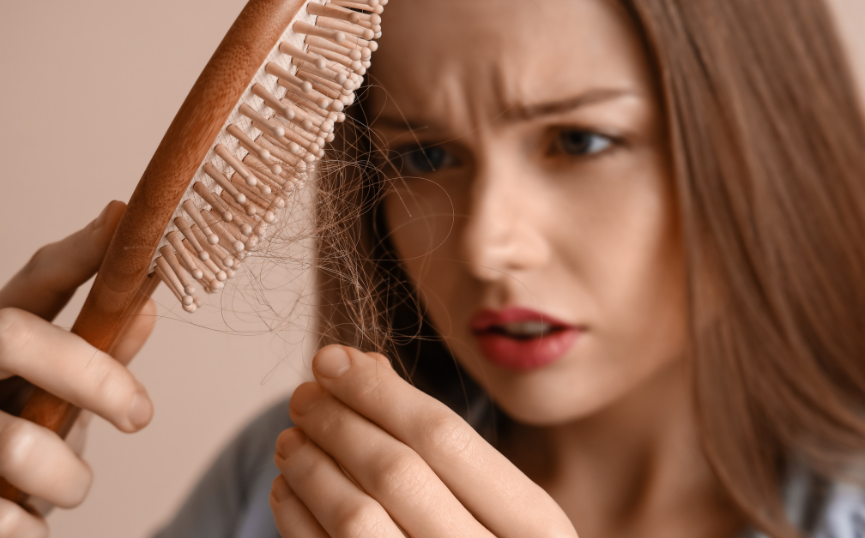
Let’s start with iron! It’s wise to test blood iron levels and only supplement iron if a deficiency is confirmed. Unnecessary iron supplementation at normal levels can be harmful, causing oxidative stress, free radical formation, and increasing risks of infections or cardiovascular issues.21,22
Zinc is a different story. This essential antioxidant plays a key role in keratin production and hair follicle health. Deficiency is common due to poor diet, absorption issues, or stress. Moderate supplementation (15–25 mg/day) is considered safe and can be started without lab tests, especially if diet suggests low zinc intake.23 Fun fact: Keratin, a fibrous protein, is the main building block of hair, providing strength and elasticity.
Zinc and selenium together! To combat hair loss, ensure adequate zinc intake and pair it with selenium, a powerful antioxidant vital for hair follicle metabolism (keratinization) and thyroid function.24
High zinc and selenium intake may lead to copper deficiency. Copper is crucial for melanin production, helping prevent hair color fading, premature graying, and breakage. Manganese supports collagen production, also contributing to hair health.23
Iodine supplementation may be warranted in some cases, but excessive iodine can be harmful in thyroid conditions (e.g., Hashimoto’s, Graves’, or nodular goiter).25,26 Only supplement iodine under medical supervision. Like iron, iodine is a double-edged sword. Deficiency from low intake (e.g., no iodized salt, seafood, or seaweed) can cause hair loss, fatigue, or hypothyroidism, but supplementation should not be automatic.
Vitamin360’s takeaway:
Choose a multivitamin with active nutrient forms, low iron, and no iodine, as these require medical oversight. For hair loss, opt for a balanced multivitamin like Natur Tanya Multi 55 - Fermented Multivitamin, ideal for preventing deficiencies but insufficient for correcting existing ones.
Pair it with WTN Zinc Complex Drops (4 pumps daily for 2–3 months) and Vitaking Biotin 900 mcg for the same duration to support keratin production.
Extra supplements for confirmed deficiencies:
- Confirmed vitamin D deficiency (most common): After medical consultation, choose from high-dose vitamin D products.
- Moderate vitamin E deficiency: Post-consultation, try Life Extension Full-Spectrum Vitamin E Softgels with Tocopherols and Tocotrienols.
- Vitamin A deficiency: Use GAL Vitamin A Drops for cost-effective, easy dosing as prescribed.
2. Stress and Nervous System-Related Hair Loss
Chronic stress disrupts hormones, elevates cortisol, and forces hair follicles into a resting phase. Supporting the nervous system is key.
These supplements can aid effective stress management:
- B-complex vitamins: B1, B2, B3, B6, and B12 support the nervous system, reduce stress effects, and fuel hair growth.30 Use WTN B-Vitamin Complex for high-dose support.
- Magnesium: A top stress-relieving mineral. Deficiency can cause anxiety, tension, and hair loss.31 Choose GAL Magnesium Bisglycinate.
- Omega-3 fatty acids: Anti-inflammatory and neuroprotective, they promote healthy scalp and hair growth.32 Try GAL Omega-3 Fish Oil, a cost-effective, easy-to-dose option. Note: For thyroid issues, consult a doctor before using fish-derived omega-3 due to potential iodine content; consider vegan omega-3 instead.
- Ashwagandha or Rhodiola rosea: These adaptogenic herbs balance stress hormones, indirectly improving hair health.33 Learn more about ashwagandha here. Try GAL Sensoril® Ashwagandha or Vitaking Rhodiola Rosea Extract.
3. Hormonal Hair Loss
In men, androgenetic alopecia, and in women, hormonal imbalances (e.g., PCOS, menopause) often cause hair thinning.
Androgenetic alopecia results from hair follicles’ sensitivity to dihydrotestosterone (DHT), a testosterone derivative. If confirmed, doctors may prescribe DHT blockers. A milder, lower-side-effect alternative is saw palmetto extract.34 Effects are noticeable after 3–6 months of consistent use and do not replace medical treatment. Try Natur Tanya Saw Palmetto Oil.
Saw palmetto’s effects can be enhanced with zinc and vitamin B6.35,36 Combine them with OstroVit MgZB Ultra - Magnesium, Zinc, B6.
For women with PCOS: Inositol (Myo-inositol, D-inositol) improves insulin sensitivity and hormonal balance.37 Vitamin360 recommends WTN Myo-Inositol Complex, which combines high inositol content with antioxidants to support healthy cell function and blood sugar stability.
Gamma-linolenic acid (e.g., from evening primrose oil): Its anti-inflammatory properties support female hormonal balance and scalp health. Try Natur Tanya Standardized Evening Primrose Oil Capsules.
4. Autoimmune-Related Hair Loss
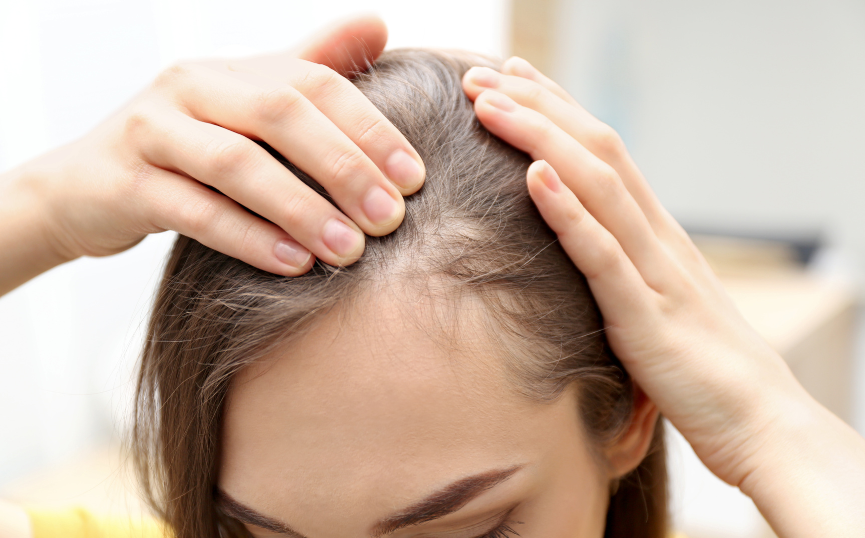
In conditions like alopecia areata, the immune system attacks hair follicles. The goal is to balance the immune system with supplements like:
- Vitamin D:38 Crucial for its immunomodulatory role.
- Selenium:39 An antioxidant supporting thyroid function and immunity.
- Vitamin C:40 Aids collagen production and immune defense.
- Probiotics:41 Gut flora balance directly impacts immunity and may reduce scalp dandruff.
- Curcumin:42 A potent anti-inflammatory that may lessen autoimmune reaction intensity.
- Omega-3:32 Strongly anti-inflammatory, critical for autoimmune conditions.
Vitamin360’s recommendations:
- For vitamins, choose Natur Tanya Multi 55 - Fermented Multivitamin.
- Pair with GAL Curcumin Complex.
- Add fiber-containing Now Foods Probiotic-10 & Bifido Boost.
In autoimmune conditions, vitamin supplementation can be a double-edged sword. An overactive immune system may worsen with excessive immune-boosting vitamins, so consult a doctor before starting any new supplement routine.
5. Thyroid-Related Hair Loss
Both hypothyroidism and hyperthyroidism are often linked to hair loss. While consulting a specialist is crucial, supplements like selenium and zinc can safely support hair growth alongside thyroid issues. Try Vitaworld Zinc + Selenium.
Tip: Ensure at least 1 mg of copper daily (from a multivitamin or separately) alongside zinc to prevent long-term copper deficiency.
Sources ⋙
- Linus Pauling Institute: Micronutrient Inadequacies Overview
- Gana W, et al. Analysis of the Impact of Selected Vitamins Deficiencies on the Risk of Disability in Older People. Nutrients. 2021;13(9):3163.
- Cashman KD, et al. Vitamin D deficiency in Europe: pandemic? Am J Clin Nutr. 2016;103(4):1033-44. doi: 10.3945/ajcn.115.120873. PMID: 26864360; PMCID: PMC5527850.
- Gana W, et al. Analysis of the Impact of Selected Vitamins Deficiencies on the Risk of Disability in Older People. Nutrients. 2021;13(9):3163. doi: 10.3390/nu13093163. PMID: 34579039; PMCID: PMC8469089.
- EurekAlert: News Release
- Lietz G, et al. Single nucleotide polymorphisms upstream from the β-carotene 15,15'-monoxygenase gene influence provitamin A conversion efficiency in female volunteers. J Nutr. 2012;142(1):161S-5S. doi: 10.3945/jn.111.140756. PMID: 22113863.
- Frontiers in Nutrition: Article
- Duell EJ, et al. Vitamin C transporter gene (SLC23A1 and SLC23A2) polymorphisms, plasma vitamin C levels, and gastric cancer risk in the EPIC cohort. Genes Nutr. 2013;8(6):549-60. doi: 10.1007/s12263-013-0346-6. PMID: 23737080; PMCID: PMC3824828.
- Oussalah A, et al. Association of TCN2 rs1801198 c.776G>C polymorphism with markers of one-carbon metabolism and related diseases: a systematic review and meta-analysis of genetic association studies. Am J Clin Nutr. 2017;106(4):1142-1156. doi: 10.3945/ajcn.117.156349. PMID: 28814397; PMCID: PMC5611783.
- Oussalah A, et al. Association of TCN2 rs1801198 c.776G>C polymorphism with markers of one-carbon metabolism and related diseases: a systematic review and meta-analysis of genetic association studies. Am J Clin Nutr. 2017;106(4):1142-1156. doi: 10.3945/ajcn.117.156349. PMID: 28814397; PMCID: PMC5611783.
- Duan L, et al. Effects of CYP2R1 gene variants on vitamin D levels and status: A systematic review and meta-analysis. Gene. 2018;678:361-369. doi: 10.1016/j.gene.2018.08.056. PMID: 30120973.
- Rozmus D, et al. rs7041 and rs4588 Polymorphisms in Vitamin D Binding Protein Gene (VDBP) and the Risk of Diseases. Int J Mol Sci. 2022;23(2):933. doi: 10.3390/ijms23020933. PMID: 35055118; PMCID: PMC8779119.
- Zhang LW, et al. Clinical and genetic study of ataxia with vitamin E deficiency: A case report. World J Clin Cases. 2022;10(23):8271-8276. doi: 10.12998/wjcc.v10.i23.8271. PMID: 36159513; PMCID: PMC9403667.
- Linus Pauling Institute: Vitamin E
- Hiraoka M, Kagawa Y. Genetic polymorphisms and folate status. Congenit Anom (Kyoto). 2017;57(5):142-149. doi: 10.1111/cga.12232. PMID: 28598562; PMCID: PMC5601299.
- Wolf B. Biotinidase Deficiency. 2000 Mar 24 [Updated 2023 May 25]. In: Adam MP, et al., editors. GeneReviews® [Internet]. Available from: https://www.ncbi.nlm.nih.gov/books/NBK1322/
- Wolf B. Biotinidase deficiency: “if you have to have an inherited metabolic disease, this is the one to have”. Genet Med. 2012;14:565–575. doi: 10.1038/gim.2011.6.
- International Journal of Molecular Sciences: Article
- Wu CH, et al. PEMT rs7946 Polymorphism and Sex Modify the Effect of Adequate Dietary Choline Intake on the Risk of Hepatic Steatosis in Older Patients with Metabolic Disorders. Nutrients. 2023;15(14):3211. doi: 10.3390/nu15143211. PMID: 37513629; PMCID: PMC10383596.
- Nutrients: Article
- Day SM, et al. Chronic iron administration increases vascular oxidative stress and accelerates arterial thrombosis. Circulation. 2003;107(20):2601-6. doi: 10.1161/01.CIR.0000066910.02844.D0. PMID: 12732602.
- Tiwari AK, et al. Oral iron supplementation leads to oxidative imbalance in anemic women: A prospective study. Clin Nutr. 2011;30(2):188-93. doi: 10.1016/j.clnu.2010.08.001. PMID: 20888091.
- Kil MS, et al. Analysis of serum zinc and copper concentrations in hair loss. Ann Dermatol. 2013;25(4):405-9. doi: 10.5021/ad.2013.25.4.405. PMID: 24371385; PMCID: PMC3870206.
- Tortelly Costa VD, et al. The Relevance of Selenium to Alopecias. Int J Trichology. 2018;10(2):92-93. doi: 10.4103/ijt.ijt_37_17. PMID: 29769785; PMCID: PMC5939011.
- Hussein RS, et al. Impact of Thyroid Dysfunction on Hair Disorders. Cureus. 2023;15(8):e43266. doi: 10.7759/cureus.43266. PMID: 37692605; PMCID: PMC10492440.
- Hatch-McChesney A, Lieberman HR. Iodine and Iodine Deficiency: A Comprehensive Review of a Re-Emerging Issue. Nutrients. 2022;14(17):3474. doi: 10.3390/nu14173474. PMID: 36079737; PMCID: PMC9459956.
- Cleveland Clinic: Telogen Effluvium
- Quist SR, Quist J. Keep quiet—how stress regulates hair follicle stem cells. Sig Transduct Target Ther. 2021;6:364. doi: 10.1038/s41392-021-00772-4.
- Botchkarev VA. Stress and the hair follicle: exploring the connections. Am J Pathol. 2003;162(3):709-12. doi: 10.1016/S0002-9440(10)63866-7. PMID: 12598304; PMCID: PMC1868107.
- Hanna M, et al. B Vitamins: Functions and Uses in Medicine. Perm J. 2022;26(2):89-97. doi: 10.7812/TPP/21.204. PMID: 35933667; PMCID: PMC9662251.
- Kothari M, et al. A Comprehensive Review on Understanding Magnesium Disorders: Pathophysiology, Clinical Manifestations, and Management Strategies. Cureus. 2024;16(9):e68385. doi: 10.7759/cureus.68385. PMID: 39355467; PMCID: PMC11444808.
- Krupa KN, et al. Omega-3 Fatty Acids. [Updated 2024 Feb 28]. In: StatPearls [Internet]. Available from: https://www.ncbi.nlm.nih.gov/books/NBK564314/
- Todorova V, et al. Plant Adaptogens-History and Future Perspectives. Nutrients. 2021;13(8):2861. doi: 10.3390/nu13082861. PMID: 34445021; PMCID: PMC8398443.
- Evron E, et al. Natural Hair Supplement: Friend or Foe? Saw Palmetto, a Systematic Review in Alopecia. Skin Appendage Disord. 2020;6(6):329-337. doi: 10.1159/000509905. PMID: 33313047; PMCID: PMC7706486.
- Lalosevic J, et al. Serum Zinc Concentration in Patients with Alopecia Areata. Acta Derm Venereol. 2023;103:adv13358. doi: 10.2340/actadv.v103.13358. PMID: 37787421; PMCID: PMC10561101.
- Liu G, et al. Pyridoxine regulates hair follicle development via the PI3K/Akt, Wnt and Notch signalling pathways in rex rabbits. Anim Nutr. 2021;7(4):1162-1172. doi: 10.1016/j.aninu.2021.09.003. PMID: 34754958; PMCID: PMC8556489.
- Greff D, et al. Inositol is an effective and safe treatment in polycystic ovary syndrome: a systematic review and meta-analysis of randomized controlled trials. Reprod Biol Endocrinol. 2023;21(1):10. doi: 10.1186/s12958-023-01055-z. PMID: 36703143; PMCID: PMC9878965.
- Saini K, Mysore V. Role of vitamin D in hair loss: A short review. J Cosmet Dermatol. 2021;20(11):3407-3414. doi: 10.1111/jocd.14421. PMID: 34553483.
- Tortelly Costa VD, et al. The Relevance of Selenium to Alopecias. Int J Trichology. 2018;10(2):92-93. doi: 10.4103/ijt.ijt_37_17. PMID: 29769785; PMCID: PMC5939011.
- Sung YK, et al. The hair growth promoting effect of ascorbic acid 2-phosphate, a long-acting Vitamin C derivative. J Dermatol Sci. 2006;41(2):150-2. doi: 10.1016/j.jdermsci.2005.11.010. PMID: 16406749.
- Yin CS, et al. Efficacy of probiotics in hair growth and dandruff control: A systematic review and meta-analysis. Heliyon. 2024;10(9):e29539. doi: 10.1016/j.heliyon.2024.e29539. PMID: 38698995; PMCID: PMC11064082.
- Bahraini P, et al. Turmeric tonic as a treatment in scalp psoriasis: A randomized placebo-control clinical trial. J Cosmet Dermatol. 2018;17(3):461-466. doi: 10.1111/jocd.12513. PMID: 29607625.
Popular


Among our articles written by our nutrition expert, you'll find product reviews and helpful tips on healthy living and prevention.
Our most popular articles:
